Key Takeaways
- Concrete work splits into two kneeling worlds: the wet side (finishing, edging, borders on a fresh pour) and the dry side (forms, layout, rebar on cured concrete). The right pad for one is the wrong pad for the other.
- Wet cement is strongly caustic — it can cause chemical skin burns when it stays in contact with fabric and skin. Pants and pads are the barrier between a fresh pour and your knees.
- A hard plastic cap can dent fresh concrete and chip cured edges. Finishers lean toward soft leather or fabric faces because they slide on wet cement instead of sticking, marking, or gouging.
- Concrete is an up-and-down trade: edge a section, move, kneel again. Bulky pads that clack together when you walk fight that rhythm all day.
- Concrete eats pads — grit, paste, and aggregate wear through cheap ones in weeks. A pad with a removable, washable cushion outlasts a sewn-shut pad by keeping the grit out.
The best knee pads for concrete are split by the side of the pour you work on: a soft-faced pad for finishing wet concrete, a tougher shell for forming and layout on cured slabs. Most lists miss that split entirely. HMYL EASY builds the soft-face side — wide straps, a face that slides on wet cement, and a cushion you can pull out and wash when the paste soaks in.
Where concrete work puts you on your knees
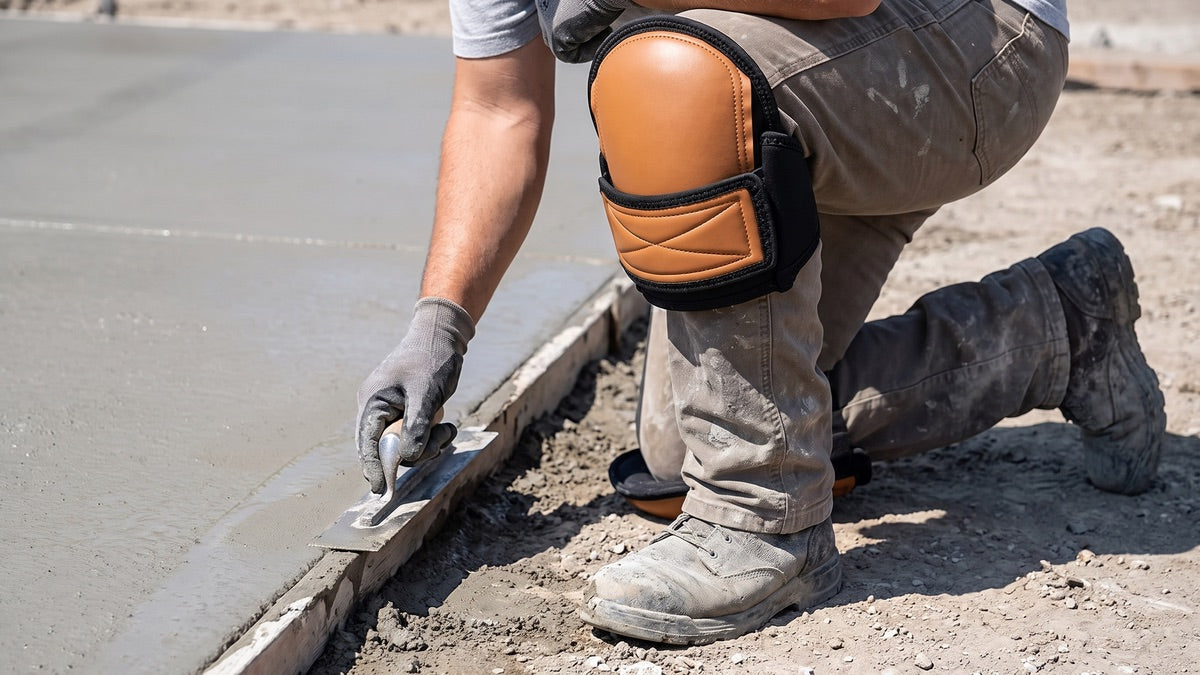
Ask a finisher where the day went and the answer is the slab. Edging along the forms, working a border by hand, catching the spot the power trowel couldn't reach — all of it on your knees, inches from the surface, while the clock runs.
And the trade's knee time comes in two flavors. The wet side is finishing: kneeling in or beside fresh concrete, hands on a float or edger, moving a few feet at a time as the surface comes around. The dry side is everything before and after — setting forms, tying rebar on deck, laying out, chasing joints on a cured slab. Dry-side kneeling is hard and gritty but chemically harmless. Wet-side kneeling is where the trade gets its reputation, because wet cement isn't just messy. It's strongly caustic — the same chemistry that hardens the slab can cause chemical burns on skin it sits against long enough. Wikipedia's entry on Portland cement puts it flatly: wet cement "can easily cause severe skin burns if not promptly washed off with water."
That's the quiet argument for knee pads in this trade that generic reviews never make. The pad isn't just cushioning on a hard surface — it's a layer between a caustic material and the skin above your kneecap. Finishers who kneel in a pour all day rely on pants and pads to keep the wet stuff off, then rinse everything at shift's end.
Hard shell or soft face? The surface decides
Most "best knee pads for concrete" lists default to hard shells. That's half right.
On the dry side, a hard shell earns its keep. Cured concrete, form stakes, rebar stubs and tie wire chew up soft faces, and a rigid cap shrugs off abrasion that would shred fabric. If your day is mostly forming and layout, a shell is the honest recommendation.
On the wet side, hard plastic is the wrong tool, and finishers know it. Three reasons:
- Hard caps mark what you just finished. Kneeling on a fresh slab with a rigid cap is a way to dent the exact surface someone is paying you to make perfect. On cured work, the same caps chip edges — a worker on r/Construction described it plainly: "I chipped a few floor edge from the hard knee pad."
- Plastic sticks; leather slides. Wet cement grabs a smooth plastic face and grabs grit while it's at it. A soft leather face rides across the surface instead of bonding to it, which matters when you're shifting down an edge without marring it.
- Caps collect paste. The ridge where cap meets padding traps cement paste, which then grinds into everything. A smooth, soft face rinses clean at the end of the day.

So the format follows the pour. Finishing and flatwork — the knee-heavy hours — favor a soft-faced pad: leather or fabric face, dense cushion, no shell. Forming and layout justify a shell. Plenty of concrete hands own both and grab whichever the morning's pour calls for.
Built for the up-and-down
Finishing is not one long kneel. It's up, down, move two feet, kneel again — a rhythm one r/Concrete poster called "the up and down work that concrete guys are always doing." A pad that fights that rhythm costs you all shift.
Bulk is the first failure. The most-loved pro pads in these threads — the tall, hinged kind finishers rave about — get described as feeling "like clouds under your knees" for hours of finishing, and the same owner admits they're "a little bulky for walking around the job site." That's the trade-off at the top of the market: platform versus mobility. At $200 to $400 a pair, they're brilliant if you finish all day every day and a lot of pad if you don't.
Rigidity is the second. Wide, stiff pads "hit one another when walking," as another r/Construction commenter put it — fine on your knees, annoying everywhere between kneels. A lower-profile pad you can walk in keeps you moving between sections.
Then the snag factor. Concrete sites are full of stakes, bar, and wire at knee height, and a finisher on r/Concrete valued his pads partly because they "saved me from getting snagged on stakes and bar" — coverage across the front of the knee, not just a dot under the kneecap.
And the straps. Thin straps are the top complaint across every trade thread, and concrete is the worst case: up-down cycles all day, over pants, in the heat. Anything narrow enough to dig cuts circulation before lunch. Wide, soft-backed straps — or pads riding in the knee pockets of your work pants — are the two answers that hold up.

The pocket route deserves a fair look on the dry side. Inserts in double-knee pants carry no straps at all, which is why plenty of form carpenters and layout hands prefer them. We compared the formats trade by trade in the best knee pads for construction guide.
Concrete eats knee pads — plan for it
The opening post of that r/Concrete thread was one line: "I've bought a couple different pair and they don't last." The replies agreed. Cement paste packs into the padding, grit from the slab sands the face every time you shift your weight, and a wet pad dried crusty in the truck bed never comes back.
Two habits separate pads that last from pads that don't.
Rinse and wash, weekly at least. Paste and grit left in a pad keep grinding long after the shift ends. A pad built to be washed — cushion out, cold gentle cycle, hung to dry — actually gets that treatment; a sewn-shut pad gets hosed off and keeps its grit. The knee pad washing guide covers the routine, and it matters double in this trade.
Replace the cushion, not the pad. When padding goes flat from months of slab work, a pad with a removable cushion takes a fresh insert for a few dollars — the economics we laid out in when to replace your knee pad cushion. A sewn-shut pad that goes flat is garbage; there's nothing to do but buy new.
Five checks before you buy
Run any pad — ours included — through these:
- A face that matches your side of the pour. Soft leather or fabric for finishing and wet work; a shell only if your day is forms and cured slab.
- Wide, soft-backed straps. The up-down cycle is brutal on thin bands. If straps dig by mid-morning, the pads will live in the truck by Friday.
- Front-of-knee coverage. Stakes, bar, and tie wire all sit at knee height. A pad that caps the whole front of the knee protects more than the kneeling surface.
- A cushion you can pull out and wash. A washable pad stays usable; a sewn-shut pad holds grit until it's dead.
- A walkable profile. You'll cover the pour on your feet between kneels. If the pads clack when you walk, you'll take them off — and then they can't help you.
Frequently Asked Questions
What are the best knee pads for concrete work?
For finishing and flatwork on fresh concrete, a soft-faced pad — leather or fabric face, dense cushion, wide straps — because it won't mark the slab and slides on wet cement instead of sticking. For formwork and layout on cured concrete, a hard shell is the tougher choice. Many concrete hands own both and pick by the day's pour.
Can you kneel in wet concrete with knee pads on?
You can, and in this trade you will — but treat it as contact with a caustic material, not just mud. Wet cement can cause chemical skin burns when it sits against skin long enough, so the barrier matters: work pants, pads covering the front of the knee, and a rinse for both at the end of the shift.
Do hard-shell knee pads mark fresh concrete?
They can. A rigid cap concentrates your weight on a small edge, and on green concrete that edge can dent the surface you're being paid to finish — the same caps chip cured edges. That's why finishers lean toward soft leather or fabric faces for wet work and save shells for forming and layout.
How long do knee pads last in concrete work?
Depends on the side of the pour and the care. Grit and cement paste are abrasive, so a sewn-shut pad that never gets washed can die in weeks. Rinsing paste out weekly, washing the cushion, and replacing the insert when it flattens keep a good set going for seasons.
What's better for concrete: strapped pads or inserts in work pants?
Strapped pads for the wet side — more cushion, more knee coverage, and they stay put while you shift along an edge. Inserts for the dry side — no straps, no circulation issues, always in the pants when layout or formwork calls.
What to Do Next
Pick the pad by the side of the pour you actually work. If your hours go into finishing, edging, and flatwork, the HMYL EASY soft work knee pads are built for that side: a soft leather face that won't mark a slab you just finished, wide straps that survive the up-and-down, and a cushion that pulls out for the weekly wash when paste soaks in.
Mostly on forms and layout, in work pants with knee pockets? Breathable knee pad inserts are the zero-strap answer for cured-slab days. For the full picture — pads, inserts, and which trade each format suits — start with the knee pads for work complete guide.
Sources:
- Wikipedia: Portland cement — wet cement is strongly caustic and can cause severe skin burns if not promptly washed off; cement is highly alkaline and its setting is exothermic
- r/Concrete: Knee pads — finishers on pads that don't last, the up-and-down rhythm, bulky-but-comfortable pro pads, and snag protection on stakes and rebar
- r/Construction: What's everyone's favorite knee pads? — tradesmen on decades-lasting pro pads, straps and circulation complaints, and knee-pocket alternatives
- r/Construction: Which one should I get? Both are same price. — rigid pads clacking while walking, pads sliding down, and a hard knee pad chipping floor edges