Key Takeaways
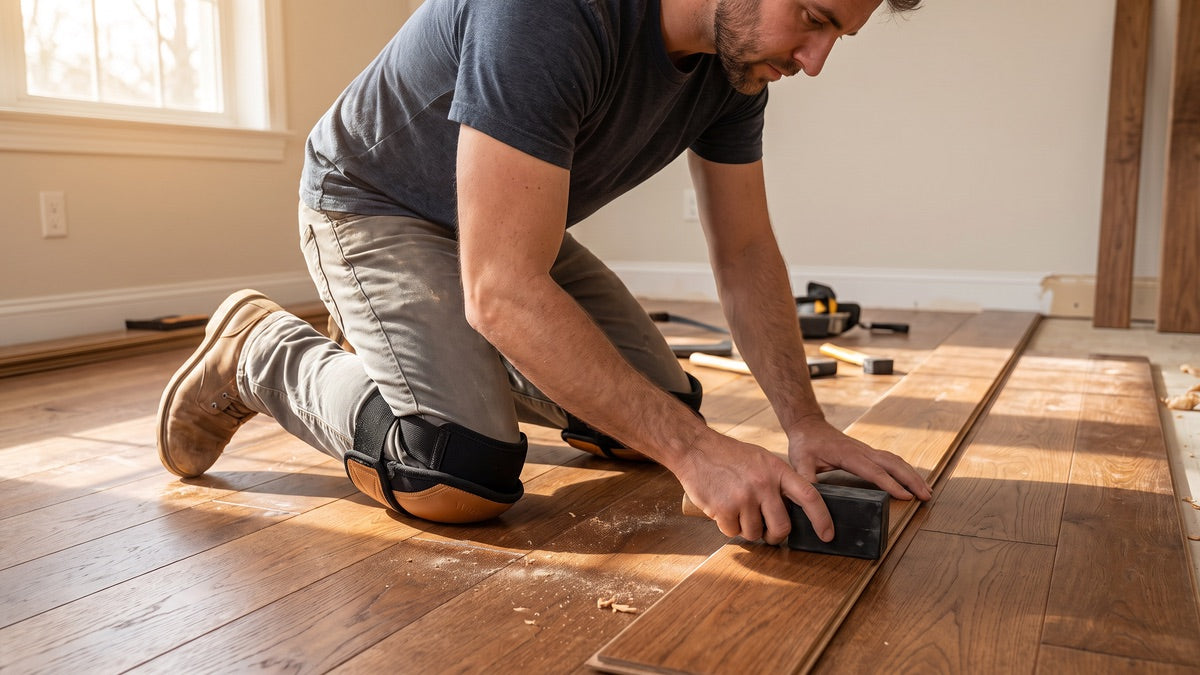
- Flooring may be the most kneeling-intensive trade there is. Hardwood, LVP, tile, and carpet installers stay down for hours — not the quick knee-drops a framer does. The pad has to survive an eight-hour shift.
- The most common bad buy is a cheap gel pad: fine in the store, flat by mid-shift. Press the cushion with your thumb before you buy — if it flattens now, it'll flatten under you.
- Hard-shell pro systems shift load off the kneecap and down the shin, which is why they work. But the shell sits on a platform that raises your kneeling height, and that posture change takes real adjustment — one installer on r/Flooring describes having to relearn a movement pattern built up over years.
- Flooring pads go sour faster than any other trade's. Sweat, sanding dust, and floor adhesive soak into the foam — installers on r/HardWoodFloors describe rotating two pairs and sunning them to fight it.
- What makes expensive pro systems last is that their parts are replaceable. A mid-range pad with a swappable inner cushion gets the same economics at a fraction of the price.
- Strap width beats foam depth for daily wear. The most common complaint from flooring crews is pads that slide down the shin or bunch behind the knee.
The best knee pads for flooring are a soft-faced strap-on pad with a cushion deep enough not to bottom out, a wide strap that grips the pant leg, and a cushion you can pull out to wash or replace. The HMYL EASY option we sell follows that setup, and it's our pick below. But flooring isn't one job — tile, hardwood, LVP, and carpet each load a pad differently, so match the pad to your substrate.
Flooring isn't an up-and-down job. It's an eight-hour one.
Construction workers kneel to nail a plate or set a form, then they're up and moving. Roofers rotate between kneeling and standing. Flooring is different: you get down in the morning and you stay down.
Ask flooring crews how long they spend kneeling and the answers come back in hours, not minutes. Under a thread asking exactly that on r/Construction, installers describe going "several hours at a time, sometimes all day for weeks on end." That changes what you need from a pad. One built for quick knee-drops optimizes for speed. One built for an eight-hour shift has to hold your body weight off a hard substrate all day without collapsing under you — including the last few inches of the drop, when you're not thinking about landing.
Hard shell or soft pad: the flooring version of the call
Nearly every buying guide frames this as "hard caps for rough ground, soft caps for smooth." That's the construction answer. On flooring, the tradeoff runs the other way.
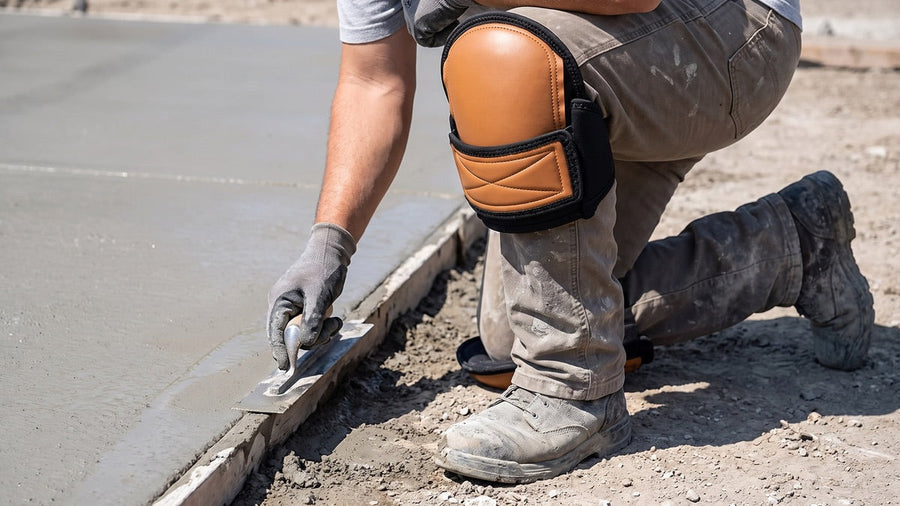
The hard-shell pro systems — the ones that run into the hundreds of dollars — exist because they work. They move load off the kneecap and onto the shin, and installers who've worn them for twenty years credit them for staying in the trade. Setting tile over concrete all day, that's the right tool.
But hard shells carry a cost the listicles skip. The first is posture: the shell sits on a platform, so you're kneeling higher than you're used to. One installer on r/Flooring warns that a guy who's installed a certain way for years has to "relearn certain situations" while his ankles adjust to the new height. Muscle memory doesn't update overnight.
The second is bulk. They're heavy enough that workers pull them off for the non-kneeling parts of the day — carrying boxes, walking the homeowner through the job. And a pad you take off is a pad you forget to put back on.
For hardwood, LVP, laminate, and carpet, a soft-faced pad gets you most of the comfort without the posture change. Tile over concrete is the one place the hard shell earns its bulk.

What actually kills a flooring pad: a flat cushion and a stink
Flooring pads rarely die from thin foam on day one. They die from two things, and both show up a few weeks in.
The cushion goes flat. Gel and soft foam feel great on the shelf. On concrete or hardwood, body weight compresses them, and by mid-shift you're kneeling on a pancake with a strap around it. Press it with your thumb. If it bottoms out under your thumb, it'll bottom out under you — the failure isn't softness, it's a cushion that doesn't spring back.
The pad goes sour. No trade is harder on pad hygiene than flooring. You sweat into it for eight hours, then kneel in drywall dust, sawdust, and floor adhesive. Installers on r/HardWoodFloors describe the smell as a daily problem and rotate two pairs or sun them. The fix is a pad you can take apart: if the cushion pulls out, you wash the shell and dry the part that holds moisture. Sewn shut, the smell is permanent — and so is the pad's lifespan.
The two setups flooring crews actually run
Forget brand lists. Two setups cover almost everyone on a flooring crew.
Setup 1: A soft-faced strap-on pad with a replaceable cushion. This is the all-rounder for hardwood, LVP, laminate, and carpet. Three things matter — an abrasion-resistant face, because concrete dust and grit grind soft fabric to nothing; a wide strap that grips your pant leg; and a replaceable inner cushion, the part most buyers overlook. A pro system lasts decades because every worn part swaps out, and a replaceable cushion lets you refresh the part that wears without automatically replacing the entire pad. For what keeps a pad comfortable hour after hour, see the most comfortable knee pads for work; for details on a soft PU synthetic-leather face, the leather knee pads guide.
Setup 2: Pads that live in your work pants. If you wear pants with knee pockets — most flooring crews do — breathable pocket inserts stay in the pants full-time. Nothing behind your knee, nothing to adjust, nothing to slide down. The cushion is thinner than a strap-on pad, so inserts suit days when you're moving between rooms better than a full eight-hour tile day. Electricians lean on this setup heavily, and the logic holds for flooring too — see how trades run pocket inserts.
What to check before you buy
Run any pad — ours included — through these five checks:
- Cushion rebound, not just depth. Press it. It should push back. A pad that feels plush but doesn't recover flattens by lunchtime on concrete.
- Strap width and where it lands. The most common flooring complaint isn't padding — it's pads that bunch behind the knee or slide down the shin. A wide strap that grips the pant leg beats an extra half-inch of foam.
- Face material, chosen by substrate. Setting tile over concrete? A hard shell can make sense. Hardwood, LVP, or carpet? A soft face may be gentler on finished floors than a hard cap, but check for grit beneath any pad before kneeling.
- A bottom that doesn't mark. Check the underside, not just the top. On smooth flooring, a non-marring bottom matters as much as the cushion above it.
- A cushion you can replace. If it's stitched shut, the pad has an expiry date built in. The ten-dollar gel pad that dies in a month is the expensive habit.
Whatever you buy, keep it clean — dust-clogged pads wear faster and smell worse. The knee pad washing guide covers the routine.

Frequently Asked Questions
What knee pads do professional flooring installers use?
Most crews run one of two setups: a soft-faced strap-on pad for hardwood, vinyl, and carpet, or a hard-shell pro kneeling system for tile and concrete. The hard shells cost several times more and change your kneeling height, so many installers keep them for heavy tile jobs.
Are hard or soft knee pads better for flooring?
Soft-faced pads suit most flooring work. They protect your knees on hardwood, LVP, and carpet without the scratch risk or posture change of a hard shell. Hard shells make sense when you're setting tile over rough concrete, where a hard cap spreads load and resists pointed debris.
How do I stop knee pads from sliding down my shin while installing floors?
Pick a wide strap that grips your pant leg rather than a thin elastic band, and snug the lower strap first — it carries most of the load. If they still slide on skinny legs, pocket inserts inside the pants eliminate the problem.
How long should flooring knee pads last?
Service life depends on the surface, frequency of use, and care. With a replaceable cushion, you can refresh that part when it wears without automatically replacing the whole pad.
Can you wear knee pads under work pants for flooring?
Yes, and plenty of crews do. Pocket inserts slide into the knee pockets sewn into most work pants and stay there, so nothing sits behind the knee. Strap-on pads go over the pants, where the strap grips the fabric.
What to Do Next
Match the pad to your substrate. Tile and leveling compound: a hard shell earns its bulk. Everything else on a flooring schedule: a soft-faced strap-on pad with a wide strap and a cushion you can replace.
The HMYL EASY soft work knee pads we sell have a soft PU synthetic-leather face, X-reinforced stitching, adjustable wide straps, and a removable inner cushion that can be washed or replaced. Spend most of your week in knee-pocket pants? Pair them with breathable knee pad inserts and skip the straps.
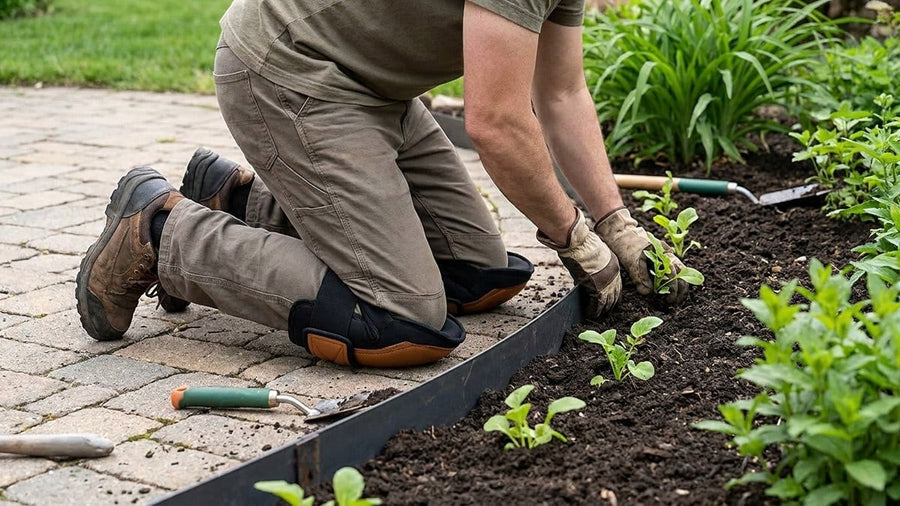
For the full picture of all three pad types, start with the knee pads for work complete guide. And if you are weighing a ground mat against pads, the kneeling pad vs knee pads comparison settles it by work pattern. Spending more weeks setting tile than laying floors? The tiling knee pad guide runs through thin-set, hard shells, and the up-and-down half of the job. Gardening on the weekend, up and down between beds? The gardening knee pad guide covers soft ground and shorts weather.
Sources:
- Cleveland Clinic: Prepatellar bursitis — repeated kneeling as an occupational cause of swelling in front of the kneecap
- Wikipedia: Prepatellar bursitis — the "housemaid's knee" name and its association with kneeling trades
- r/Construction: Flooring guys — what's the longest time you can stay on your knees? — installers describe multi-hour and all-day kneeling shifts
- r/Flooring: Recommended knee pads — installer discussion of hard-shell pro systems, the kneeling-height change, and replaceable parts
- r/Flooring: Good knee pads that don't bunch up on the back of your knees — the behind-the-knee complaint, in installers' own words
- r/HardWoodFloors: Knee pads — daily hardwood and LVP installers on pad odor, rotating two pairs, and sunning them